
High Cap Rates in Triple Net Deals: Risk, Not Opportunity
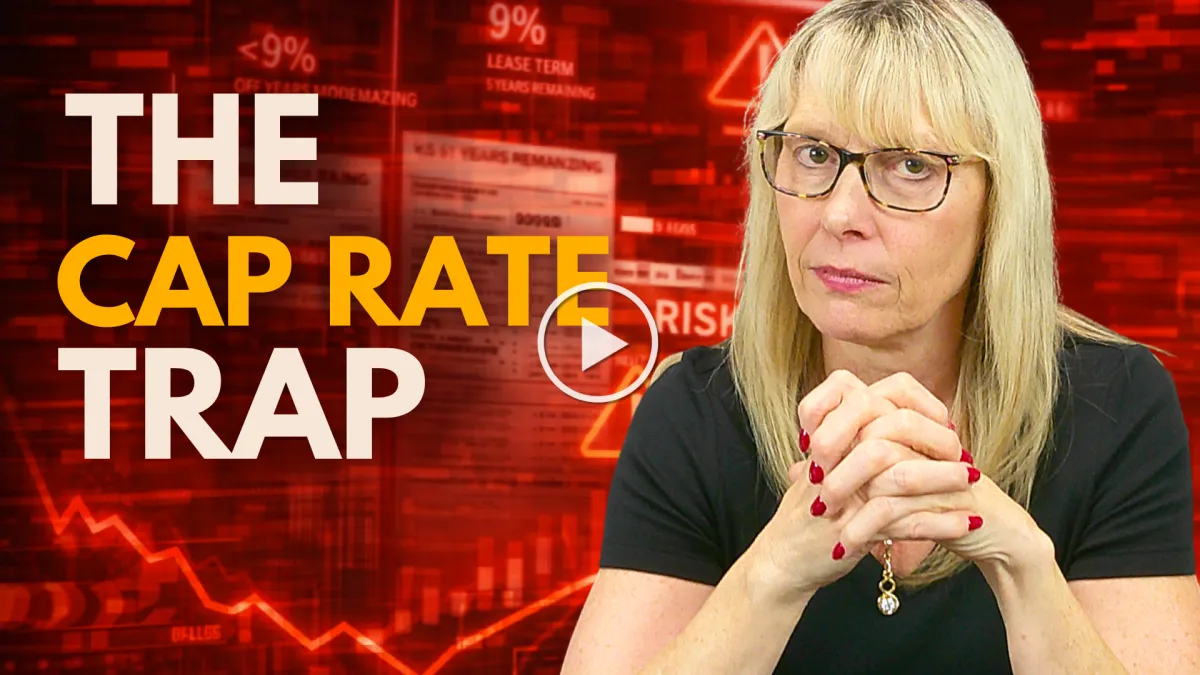
A high cap rate in a triple net deal is one of the most misread signals in commercial real estate.
It is not a discount. It is not a better return. It is risk being priced into the transaction — and the investors who miss that distinction are usually the ones who find out what the market was trying to tell them at the worst possible moment: when they are trying to sell.
Why Investors Pursue Triple Net in the First Place
Most of the owners I talk to who are considering a triple net transition are coming from older apartment assets. They have spent years managing tenant turnover, deferred maintenance, aging systems, and the operational weight that comes with multifamily ownership. The appeal of a NNN lease is genuine — a national tenant, predictable rent, and a property where the management burden shifts away from the owner.
That trade-off is real. But there is a version of it that investors underestimate: you are not eliminating exposure when you move into triple net. You are changing the form it takes.
Operational risk becomes lease risk. And lease risk, when it is not underwritten carefully, can be more difficult to manage than a maintenance call ever was. You cannot fix a short lease term the way you can fix a roof.
What Compressing Lease Term Does to a Deal
The clearest version of this plays out as lease term shortens. A property with 14 years remaining on its lease and a property with 6 years remaining are fundamentally different assets — even if the rent is identical.
Lenders do not underwrite NNN deals based on historical income the way they might with a stabilized apartment building. They look at remaining lease term. As that number drops, loan proceeds compress, scrutiny on tenant financial strength increases, and refinance options narrow. The flexibility you assumed you would have at exit starts to disappear.
Insurance carriers are also repricing risk across asset classes right now. Shorter-term deals face more friction on both the debt and insurance side simultaneously, which directly affects what a buyer can pay for your property when you decide to move on.
A high cap rate on a short-term NNN deal is often the market communicating exactly this. The yield looks attractive. The remaining term is what is being discounted.
The Execution Risk That Does Not Show Up on a Rent Roll
Execution risk in triple net is not physical. You are not looking at a boiler or a parking lot. You are underwriting a set of contractual assumptions — and the most dangerous of those is a renewal assumption.
If the investment thesis for a deal only works if the tenant renews at the end of the current term, the deal is fragile. Tenants have no obligation to renew, and national tenants make those decisions based on store performance, market strategy, and factors that have nothing to do with your ownership timeline.
Buyers and lenders know this. When you go to sell a deal that only pencils with a renewal baked in, you will find that the market underwrites the downside. That is where retrading happens — where a price that looked agreed upon gets renegotiated after due diligence because the buyer’s lender will not support the original number without term certainty that does not exist.
The question to ask before you buy is the same one a future buyer will ask when you sell: does this deal work without a renewal assumption? If the answer is no, price it accordingly now.
Proactive Versus Reactive in Triple Net
There are two types of NNN investors, and the difference between them shows up most clearly at disposition.
Reactive investors chase yield. They buy higher cap rates without aligning the remaining lease term to their intended hold period. They assume the tenant will renew, that the market will stay favorable, and that they will exit before the lease risk becomes a pricing problem. Sometimes they are right. When they are wrong, they are negotiating from a weak position at the worst time.
Proactive investors start with the exit. They match lease term to hold period so that when they are ready to sell, the remaining term still supports strong buyer demand. They underwrite without renewal assumptions and stress-test what the deal looks like if the tenant walks. They price risk based on how a future buyer — and that buyer’s lender — will see the asset.
One group negotiates from strength. The other adjusts to the market.
What a High Cap Rate Is Actually Telling You
A high cap rate is not automatically a better deal. In triple net, it is almost always a signal — of short remaining term, tenant risk, below-market rent that has not grown with the market, or a location that limits future buyer demand.
The right question is not whether the yield looks attractive. The right question is whether you understand what the market is pricing, and whether you are being compensated appropriately for the risk you are taking on.
Because in triple net, you are not buying income. You are buying time — a finite lease with a specific tenant in a specific market, and a future exit that will be priced on conditions you do not fully control.
If you are evaluating a triple net property as part of a 1031 exchange or a transition out of multifamily, I’m glad to walk through the underwriting with you. Schedule a confidential Pinpoint Price Evaluation on your current asset and we’ll look at both sides of the decision — what you’re leaving and what you’re moving into.
If you want to understand how your property is likely to be valued in today's market, start with the data. Request your Eugene–Springfield Apartment Market Snapshot or your University of Oregon Area Apartment Market Snapshot to see what properties like yours are actually selling for, what buyers are underwriting, and where the market is headed.
— René Nelson, CCIM
Principal Broker & Owner, Pacwest Commercial Real Estate
René Nelson, CCIM, is the Principal Broker and Owner of Pacwest Commercial Real Estate, a boutique brokerage in Eugene, Oregon specializing in multifamily and investment property. Licensed since 1989 and CCIM-designated since 2008 — a credential held by fewer than 10% of commercial brokers nationwide — she has guided private and institutional clients through complex 1031 exchanges and strategic exits across the Eugene–Springfield and University of Oregon markets for more than three decades. A multiple-time CCIM Transaction of the Year recipient (2013, 2015, 2020, 2021) and winner of the 2024 Best Overall Transaction of the Year, René is known for turning complex transactions into confident, profitable outcomes — helping owners move from hands-on management to hands-free income while protecting the equity and legacy they’ve spent a lifetime building. The resources shared here are for informational purposes only and are not financial, tax, or legal advice. Every property and owner’s situation is unique. For guidance tailored to your goals, connect with me directly and we’ll walk through your options together.
Featured
Insights. Advice. Results.
Why I Do This Work: My Philosophy on Multifamily Real Estate and Legacy
René Nelson, CCIM, on the philosophy behind Pacwest Commercial Real Estate — how she helps Eugene multifamily owners sell, exchange, and build lasting legacy.
CCIM Designee since 2008 • Licensed since 1989 •
2024 Best Overall Transaction
© 2026 Pacwest Commercial Real Estate, Inc.
Terms & Conditions | Privacy Policy