
Maintenance Mistakes That Reduce Apartment Property Value
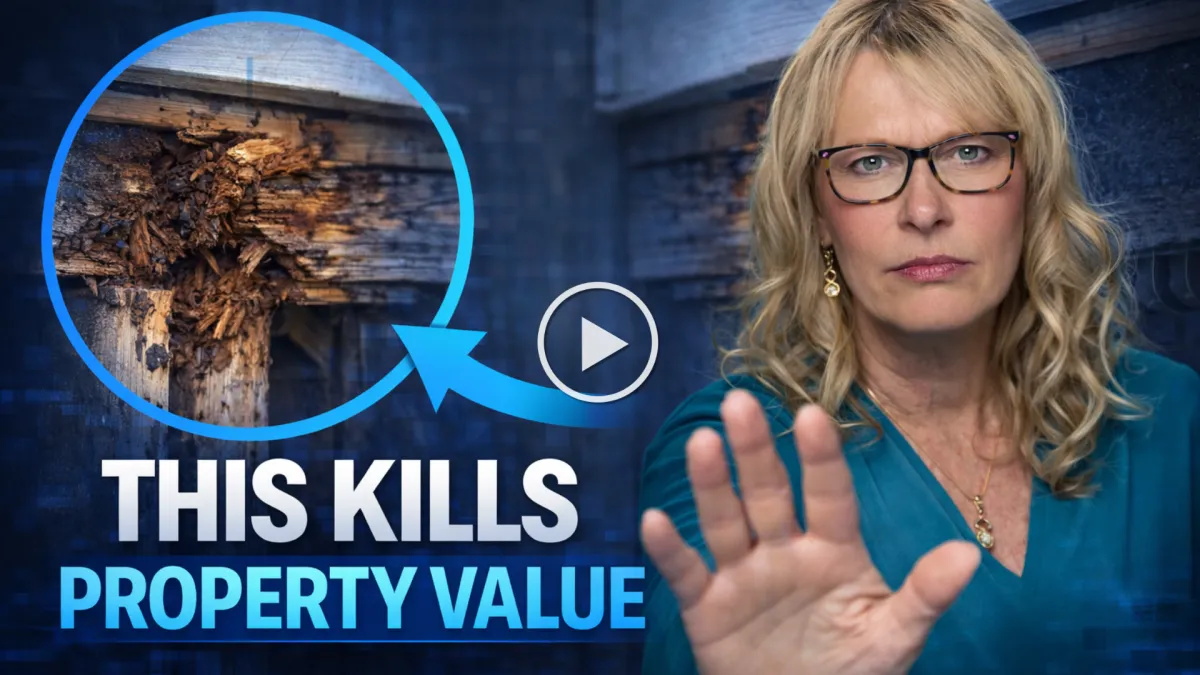
If you own an apartment property and are thinking about holding or selling in the next few years, the maintenance decisions you make today are directly tied to your future outcome. That is not a generalization. It is showing up in inspection reports, insurance renewals, and lender underwriting right now.
In this episode of Commercial Connections, I sat down with Doug Palmer of Palmer Inspections to talk through how property condition is increasingly driving insurance costs, financing terms, and deal execution in multifamily real estate. What he laid out is practical, specific, and applies to any owner thinking about what their asset will look like on the other side of a transaction.
Deferred Maintenance Does Not Eliminate Cost. It Relocates It.
The most important part of this conversation with Doug was this: deferred maintenance does not save money. It delays the expense and, in most cases, increases it.
Owners who postpone repairs to protect short-term cash flow often find those costs resurfacing at the worst possible time — during inspection, during underwriting, or at the negotiating table after a buyer has already done due diligence. At that point, the repair is no longer a maintenance line item. It is a price reduction, a repair credit, or a condition that slows or kills the financing.
The math rarely favors waiting. A deferred repair that costs $8,000 today does not become a $6,000 repair in two years. It becomes a $14,000 repair with a retrade conversation attached to it.
Insurance Carriers Are Tightening. Owners Are Feeling It.
Insurance is playing a larger role in multifamily ownership than it has in years, and the shift is not subtle. Carriers are applying stricter underwriting standards, and properties with specific conditions are being priced differently — or declined.
The three areas Doug flagged most directly are electrical panels, plumbing systems, and roof condition. An outdated panel that has not been flagged as a problem by the owner may trigger a premium increase or coverage limitation at renewal. Aging plumbing and a roof that is past its useful life create similar friction — not because something has failed, but because the carrier is pricing the probability that it will.
This is forcing a shift in how owners need to think about capital improvements. The question is no longer just what the property needs to operate. It is what the property needs to remain insurable at a reasonable cost — and what it needs to finance and sell cleanly when that time comes.
Water Intrusion: The Most Common Problem With the Longest Tail
Of all the issues Doug encounters in multifamily inspections, water intrusion comes up most consistently — and it carries the longest tail of consequences.
Small leaks do not stay small. A slow intrusion through a roof penetration, a failed flashing detail, or a deteriorating window seal can work its way into framing and sheathing before any visible sign appears on an interior surface. By the time an owner sees water staining or soft drywall, the damage behind it is often significant.
Rot, mold, and structural damage — the downstream results of unresolved water intrusion — are expensive to remediate and disruptive to occupants. They are also among the most common findings that produce a retrade or a price adjustment in a sale. And they are almost entirely preventable with annual roof checks, gutter maintenance, and basic envelope inspections.
The cost of prevention is not close to the cost of remediation. That gap is where proactive ownership creates real financial value.
The Inspection Conversation Buyers Are Having Without You
One thing that tends to surprise owners is how much is documented during a professional inspection — and how differently a buyer’s inspector frames findings than an owner’s ongoing sense of the property.
An owner who has lived with a slow draining gutter for two seasons sees a maintenance item. A buyer’s inspector sees a water intrusion risk and writes it up accordingly. An owner who knows the panel is original to the building but “has not caused any problems” sees a functional system. A buyer’s lender sees an underwriting flag.
Those interpretations drive negotiating positions. They produce repair requests, price reductions, or financing conditions that an owner was not planning for. The gap between how an owner sees their property and how a buyer and their lender see it is often the most expensive gap in the transaction.
The way to close that gap is not to wait for an offer and then react. It is to understand your property the way a buyer will see it before you go to market.
Proactive Versus Reactive: Where the Financial Difference Shows Up
Doug’s framing of proactive versus reactive ownership is worth taking seriously.
Reactive owners address problems when they become urgent — visible failures, tenant complaints, insurance notices. The repair happens, but it happens at a higher cost, under more pressure, and often with operational disruption that compounds the expense.
Proactive owners run regular inspections, plan capital expenditures on a documented schedule, and address issues while they are still small. The individual repair costs less. The insurance premium stays lower. The property shows better during due diligence. And the sale process is cleaner because there are fewer surprises for a buyer to price.
The properties that perform best operationally and at disposition are almost always the ones that have been consistently maintained over time. Not perfectly. Not without deferred items. But with a documented plan, realistic reserves, and an owner who understood that condition now determines value later.
If you want to understand where your property stands — how its current condition is likely to be read by a buyer, an insurer, or a lender in today’s environment — that is the right conversation to have before you are under contract. Schedule a confidential Pinpoint Price Evaluation and we’ll look at your asset specifically, including what a buyer will see and what, if anything, is worth addressing before you go to market.
— René Nelson, CCIM
Principal Broker & Owner, Pacwest Commercial Real Estate
René Nelson, CCIM, is the Principal Broker and Owner of Pacwest Commercial Real Estate, a boutique brokerage in Eugene, Oregon specializing in multifamily and investment property. Licensed since 1989 and CCIM-designated since 2008 — a credential held by fewer than 10% of commercial brokers nationwide — she has guided private and institutional clients through complex 1031 exchanges and strategic exits across the Eugene–Springfield and University of Oregon markets for more than three decades. A multiple-time CCIM Transaction of the Year recipient (2013, 2015, 2020, 2021) and winner of the 2024 Best Overall Transaction of the Year, René is known for turning complex transactions into confident, profitable outcomes — helping owners move from hands-on management to hands-free income while protecting the equity and legacy they’ve spent a lifetime building. The resources shared here are for informational purposes only and are not financial, tax, or legal advice. Every property and owner’s situation is unique. For guidance tailored to your goals, connect with me directly and we’ll walk through your options together.
Featured
Insights. Advice. Results.
Why I Do This Work: My Philosophy on Multifamily Real Estate and Legacy
René Nelson, CCIM, on the philosophy behind Pacwest Commercial Real Estate — how she helps Eugene multifamily owners sell, exchange, and build lasting legacy.
CCIM Designee since 2008 • Licensed since 1989 •
2024 Best Overall Transaction
© 2026 Pacwest Commercial Real Estate, Inc.
Terms & Conditions | Privacy Policy