
Vacancy vs Rent in Eugene: What Apartment Owners Are Missing
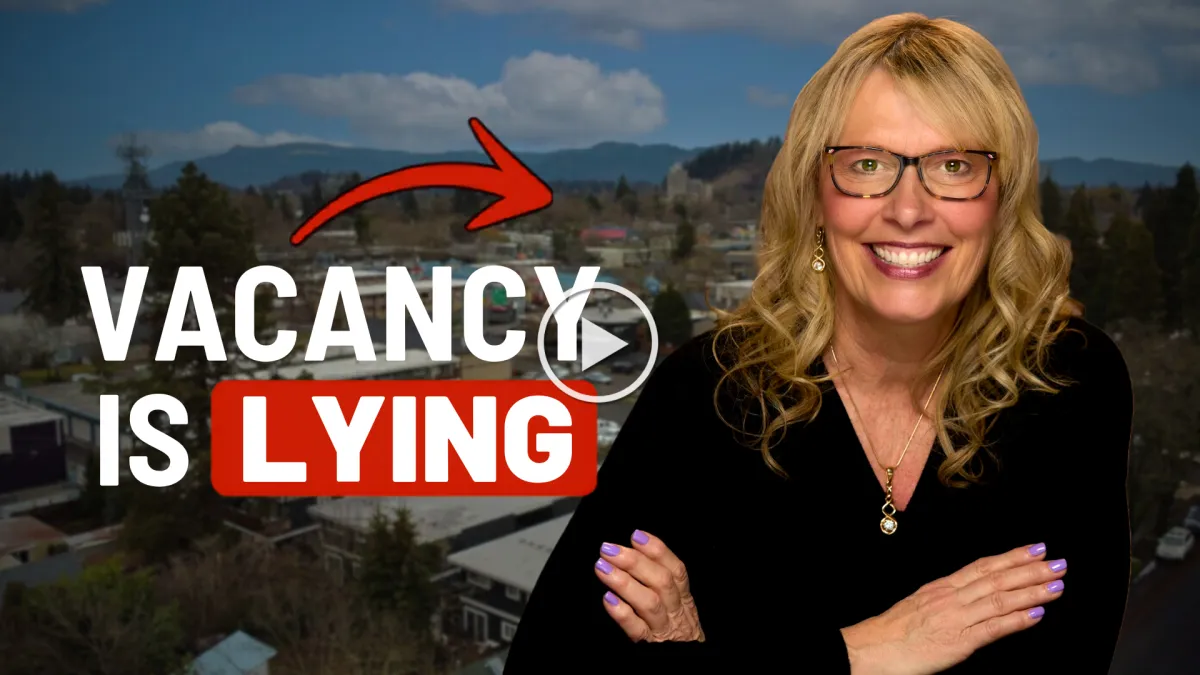
Most apartment owners in the Eugene–Springfield market are watching the same two numbers right now: vacancy and rent. Those numbers are real. But on their own, they do not tell you what is actually happening in your asset — or what you should do next.
Vacancy Is Not Evenly Distributed
Overall vacancy in the Eugene–Springfield market is sitting around 5%, which is roughly in line with long-term historical averages. On paper, that reads as stability. And for a portion of the market, it is.
But that number obscures where the pressure actually lives.
Newer, higher-end properties have absorbed most of the recent supply wave. That is where vacancy is concentrated. These assets are still working through lease-up, offering concessions, and competing against each other for the same renter pool. Meanwhile, older properties — particularly those built between the 1970s and 1990s — are holding occupancy. They compete on affordability and location rather than amenities, and that positioning has kept them relatively stable through the same period.
That distinction is not a minor footnote. It is the difference between a property that is performing in the current environment and one that is facing real pressure. A market-level vacancy number tells you almost nothing about which category your asset falls into.
What Stable Occupancy in an Older Property Can Hide
Older properties holding steady occupancy can create a false sense of security. The income is coming in. The units are filled. The operation looks normal from the outside.
Deferred maintenance does not disappear because the rent roll looks clean. It surfaces later — typically during inspections, refinancing conversations, or the sale process itself. That is where buyers retrade. That is where capital requirements become visible. That is where execution risk concentrates.
An owner who has been managing to occupancy without a parallel focus on physical condition is not avoiding risk. They are deferring it into the transaction — at exactly the moment when the stakes are highest and the timeline is least flexible.
How Flat Rent Growth and Rising Expenses Compress the Math
Rent growth in the Eugene–Springfield market has slowed to roughly 1%. That is stabilization, not decline — a meaningful distinction. But what matters operationally is what is happening on both sides of the ledger, not just the revenue line.
While rent growth has flattened, expenses have not. Insurance repricing continues. Maintenance costs move with labor and materials markets. Operational expenses compound. The result is cash flow compression that does not show up as a vacancy problem or a rent problem — it shows up as a margin problem, and it shows up gradually until it does not.
Lenders see this. When they underwrite a property today, they are applying more conservative assumptions to expense growth than they were three years ago. Buyers apply the same scrutiny. Cap rates adjust based on perceived stability and risk — and a property with tightening margins and no documented maintenance history reads as riskier than its occupancy rate would suggest.
Where Averages Break Down at the Closing Table
When a property goes under contract, the gap between market averages and property-specific reality becomes clear very quickly.
An owner who has been tracking their performance against market-level vacancy and rent data — rather than against their actual competitive set — is often surprised by what inspection and underwriting surface. Deferred maintenance becomes a line item in a retrade conversation. Unclear or incomplete financials produce conservative assumptions from the buyer’s lender. Both compress the final number and slow the process.
This is not a market problem. It is a preparation problem. And it is almost entirely avoidable with the right information in hand before the transaction starts.
The Three Questions That Actually Matter
The owners who perform best in this environment are not reacting to vacancy headlines or tracking rent trends as a proxy for their own position. They are asking more specific questions about their own asset.
How does my property compare to my actual competitive set — not the market average?
Where is my risk concentrated: physical condition, financial performance, or operational exposure?
How will this property hold up under tighter underwriting — and what would a buyer’s lender say about it today?
Flat rents do not reduce value on their own. Uncertainty does. The difference between a strong outcome and a difficult one comes down to clarity — knowing exactly where your property sits in the market and making decisions from that position rather than from averages that may not apply to your asset at all.
If you are not sure how your property would be underwritten in today’s environment, that is the right question to answer before you are under contract and working against a deadline.
The clearest way to start that evaluation is with current market data. Request your Eugene–Springfield Apartment Market Snapshot or your University of Oregon Area Apartment Market Snapshot to see recent sales, cap rates, and buyer activity specific to your market — then we can look at where your property fits within it.
— René Nelson, CCIM
Principal Broker & Owner, Pacwest Commercial Real Estate
René Nelson, CCIM, is the Principal Broker and Owner of Pacwest Commercial Real Estate, a boutique brokerage in Eugene, Oregon specializing in multifamily and investment property. Licensed since 1989 and CCIM-designated since 2008 — a credential held by fewer than 10% of commercial brokers nationwide — she has guided private and institutional clients through complex 1031 exchanges and strategic exits across the Eugene–Springfield and University of Oregon markets for more than three decades. A multiple-time CCIM Transaction of the Year recipient (2013, 2015, 2020, 2021) and winner of the 2024 Best Overall Transaction of the Year, René is known for turning complex transactions into confident, profitable outcomes — helping owners move from hands-on management to hands-free income while protecting the equity and legacy they’ve spent a lifetime building. The resources shared here are for informational purposes only and are not financial, tax, or legal advice. Every property and owner’s situation is unique. For guidance tailored to your goals, connect with me directly and we’ll walk through your options together.
Featured
Insights. Advice. Results.
Why I Do This Work: My Philosophy on Multifamily Real Estate and Legacy
René Nelson, CCIM, on the philosophy behind Pacwest Commercial Real Estate — how she helps Eugene multifamily owners sell, exchange, and build lasting legacy.
CCIM Designee since 2008 • Licensed since 1989 •
2024 Best Overall Transaction
© 2026 Pacwest Commercial Real Estate, Inc.
Terms & Conditions | Privacy Policy